Festival
Paro Tshechu Festival Tour
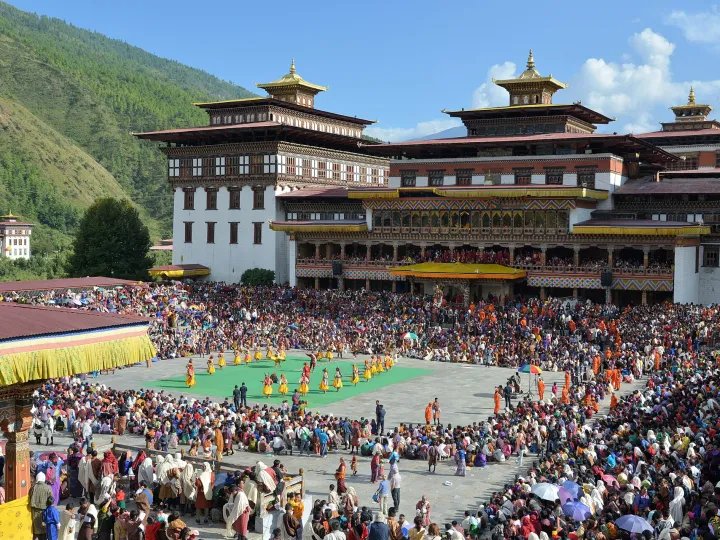
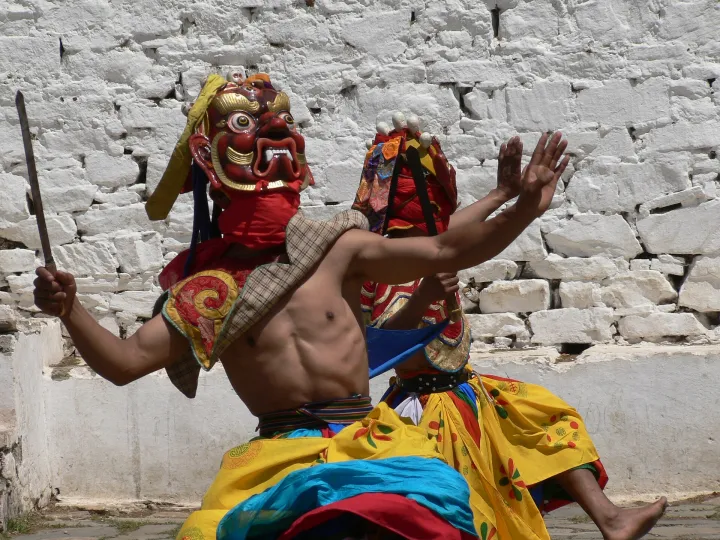
Eight days built around Paro's spring festival, ending with the dawn unveiling of the great thongdrel on the last morning.
Price on request

Cultural
Two nights each in Thimphu, Phobjikha, Punakha and Paro, so that every valley has a day with no packing in it.
This is the route of our seven-day tour with two days added, and both are days of rest from the road. You stay two nights in each of four valleys, which means that every other morning you wake with nowhere to drive to.
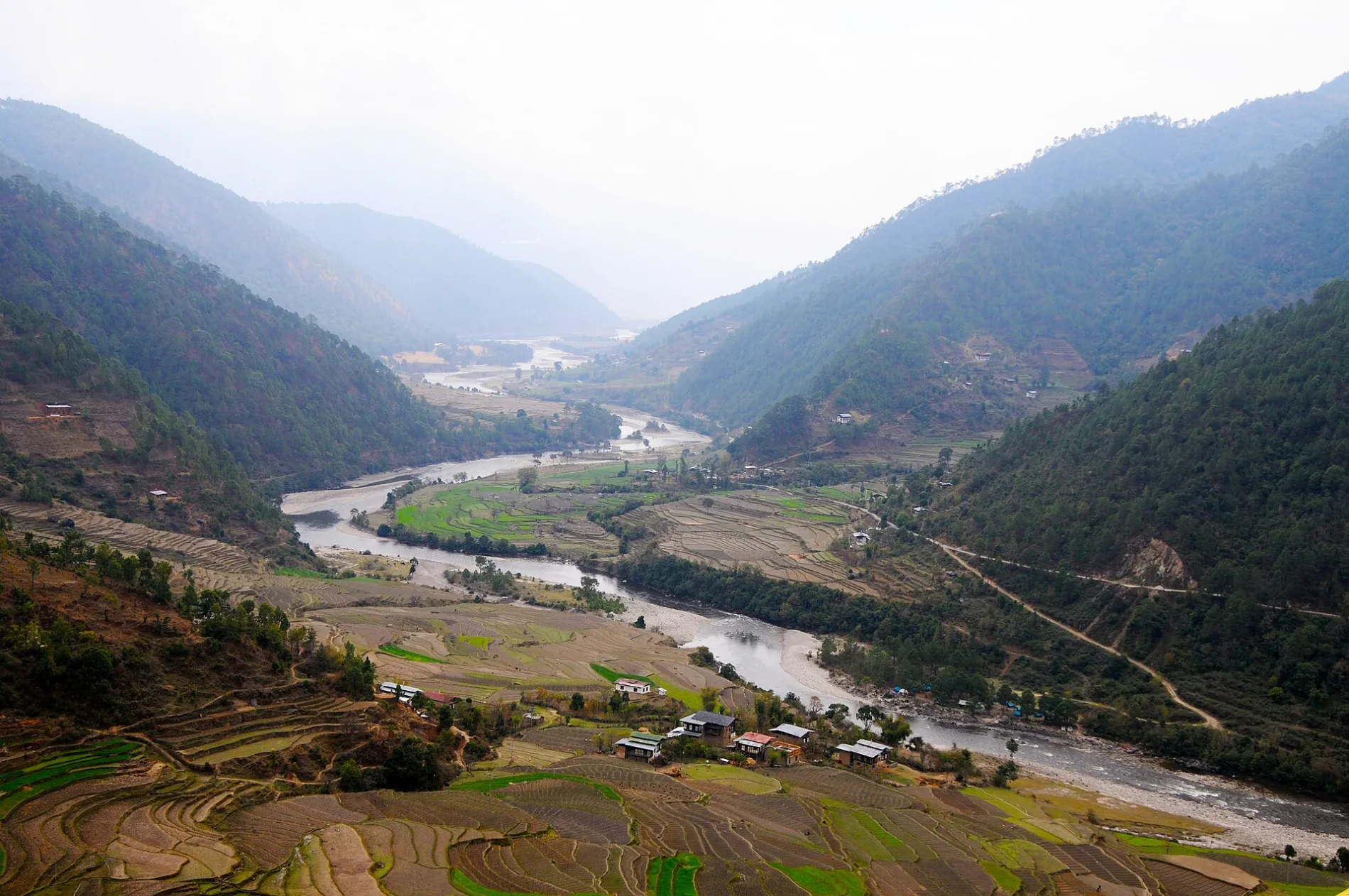
The second day in Phobjikha is the one people remember. The valley is a wide bowl of marsh and pasture at 3,000 m with a monastery on a ridge above it, and it rewards anyone who simply walks about in it.
From November to March the black-necked cranes are there. In spring the rhododendrons are out on the passes, and October and November have the clearest views.
Your guide meets you outside customs, and the capital is an hour up the river.
The first afternoon is kept light, because you have just landed at 2,300 m: a turn round the Memorial Chorten with the people of the town, and the view over the valley from the Buddha Dordenma.
A whole day in the capital. At the crafts school students paint, carve and embroider in rooms you can walk through, and the Textile Museum and the craft bazaar are a few minutes away. Changangkha Lhakhang, on its ridge above the town, dates from the twelfth century.
In the afternoon there is the takin preserve, and archery at the Changlimithang ground if a match is on. Tashichho Dzong opens to visitors at the end of the working day, so it comes last.
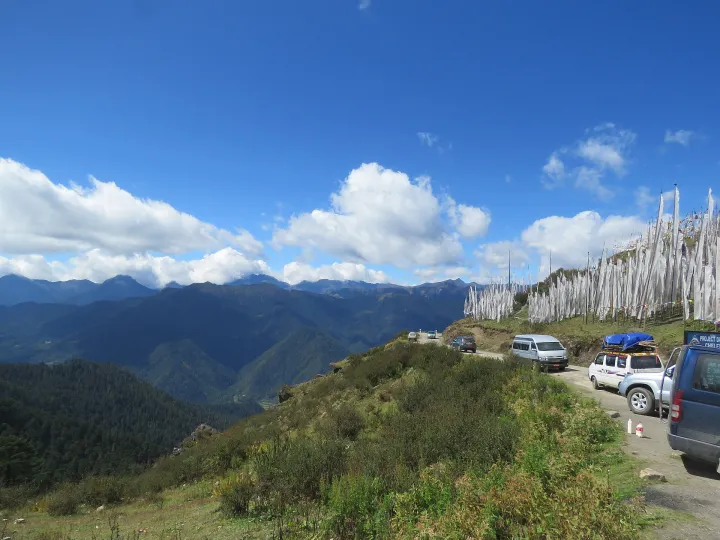
Over Dochu La, at about 3,100 m, with a stop among the 108 chortens, and down to the valley floor below Wangdue Phodrang Dzong. From there the road climbs again, through oak and bamboo, until a side road drops into Phobjikha.
You arrive in time to visit Gangtey Goenpa on its ridge before the light goes.
A day on foot. The nature trail leaves from below the monastery, runs down through blue pine and comes out at the edge of the marsh; the valley floor is level walking in every direction from there.
The information centre run by the Royal Society for Protection of Nature has telescopes trained on the marsh. From November to March the cranes are out feeding by day and fly in to roost at dusk.
A short drive back down to the warm valley. A path across the rice fields leads to Chimi Lhakhang, and Punakha Dzong, between its two rivers, is kept for the afternoon light.
A day without a long drive. In the cool of the morning you cross the Mo Chhu by footbridge and climb through the terraces to Khamsum Yulley Namgyal Chorten, about an hour each way, for the view up the valley.
After lunch, the suspension bridge behind the dzong, some 160 m long and hung with prayer flags, and time to yourself by the river.
Back over Dochu La, with a second chance at the view, and down through Thimphu to Paro. The afternoon is for Rinpung Dzong and the National Museum in the watchtower above it.
The walk everyone comes for. The trail climbs through pines to a teahouse, goes on to a viewpoint level with the monastery, then drops by steps past a waterfall before the last climb to the gate at 3,120 m. Allow four to five hours there and back.
Kyichu Lhakhang, one of the oldest temples in the country, is a quiet place to end the day.
Transfer to the airport for your flight.
Hotels in Thimphu, Phobjikha, Punakha and Paro. The lodges in Phobjikha are simpler than those in the towns, and nights there are cold.
Breakfast and dinner at your hotel and lunch at a local restaurant on the way. Tell us about any dietary need when you book; vegetarian food is easy everywhere.
A private vehicle with a driver for the whole trip. The road is paved and winding, so drives are slower than their distance suggests.
One licensed guide stays with you from arrival to departure. A guide is required by the authorities inside dzongs and monuments.
We apply for your visa once the trip is confirmed; it is normally issued within five working days. You need a passport valid for at least six months. See our pages on the [visa](/bhutan-travel-guide/visa/) and the [Sustainable Development Fee](/bhutan-travel-guide/sustainable-development-fee/).
Yes, unless you are an Indian national, in which case you need an entry permit instead. The visa costs US$40, is applied for online, and is normally decided within five working days.
When you book with us we make the application for you. You send a scan of your passport, which must be valid for at least six months, and a recent passport photo. See Bhutan visa and entry permits.
A fee every visitor pays to the government of Bhutan for each night in the country. It is US$100 a night for adults and US$50 for children aged 6 to 11; children under 6 pay nothing. Indian nationals pay Nu. 1,200 a night.
It is paid with your visa application. When you travel with us we collect it with the tour payment and pass it on. See the Sustainable Development Fee.
March to May and September to November have the mildest weather and the clearest skies, and the largest festivals fall in those months. They are also the busiest.
Winter is cold but dry and sunny, with the black-necked cranes in Phobjikha and the Punakha festivals. Summer is the monsoon: green, quiet and often cloudy. See the best time to visit Bhutan.
It is a steady uphill walk on a wide path, not a climb, and most people in ordinary health manage it. Allow four to five hours there and back. The monastery is at about 3,120 m, so you will feel the altitude; go slowly and drink plenty of water.
That is why our itineraries keep it for the end, after several days in the country. A teahouse halfway makes a good turning point for anyone who would rather not go on. See hiking to the Tiger's Nest.
More tours
Festival
Eight days built around Paro's spring festival, ending with the dawn unveiling of the great thongdrel on the last morning.
Price on request
Festival
The capital's great autumn festival at Tashichho Dzong, with the Tiger's Nest before it and the warm valley of Punakha after.
Price on request
Cultural
Five western valleys, two high passes and a day in quiet Haa, at a pace that leaves room to walk as well as drive.
Price on request
A few lines are enough: when, how long, and what draws you to Bhutan. We answer with a suggested route and what it would cost.
We reply ["within 24 hours"].