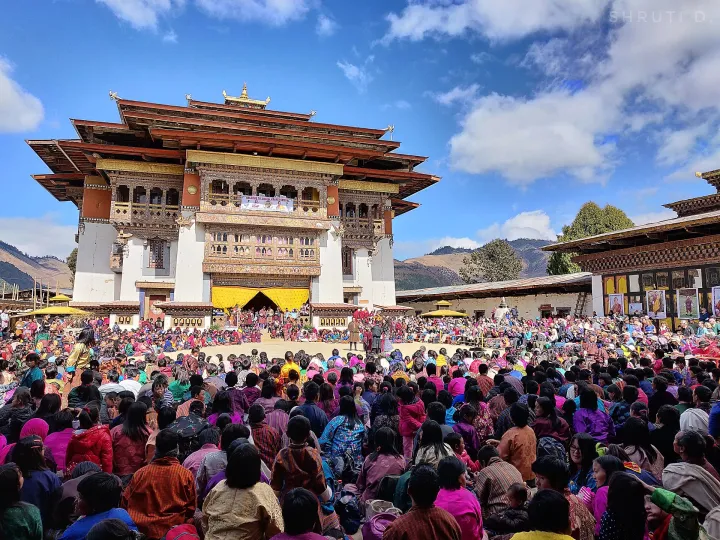
Festival
Black-Necked Crane Festival Tour
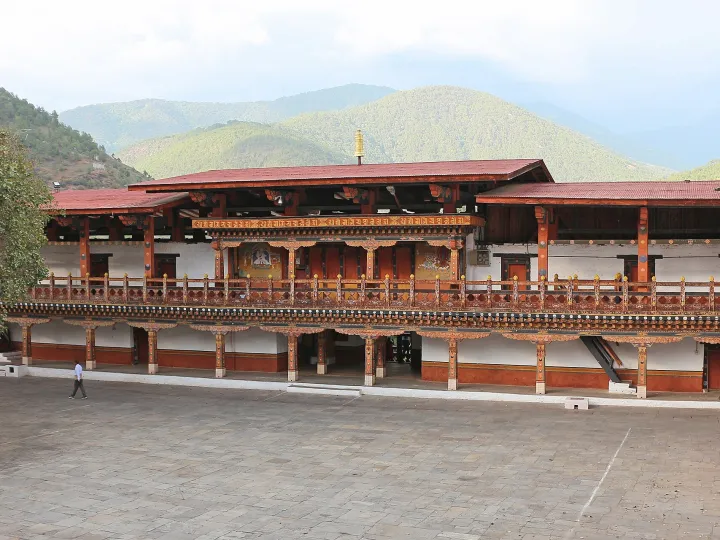
A week timed for 11 November, when Phobjikha welcomes its cranes back from Tibet with a festival in the courtyard of Gangtey Goenpa.
Price on request

Festival tours
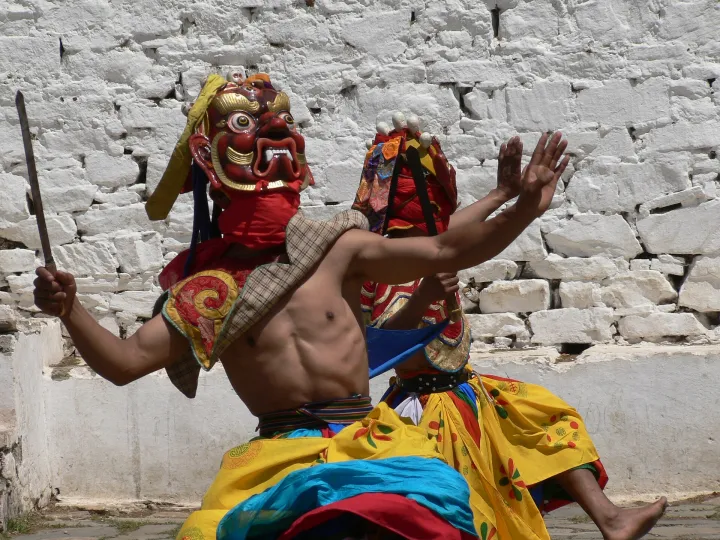
Tours timed to the masked dances of a tshechu, with the tentative dates from the official list and the usual sights before and after.
Festival
A week timed for 11 November, when Phobjikha welcomes its cranes back from Tibet with a festival in the courtyard of Gangtey Goenpa.
Price on request
Festival
A winter journey to Punakha Dzong for the Drubchen, when local men in warriors' dress re-enact a seventeenth-century battle.
Price on request
Festival
Eight days built around Paro's spring festival, ending with the dawn unveiling of the great thongdrel on the last morning.
Price on request
Festival
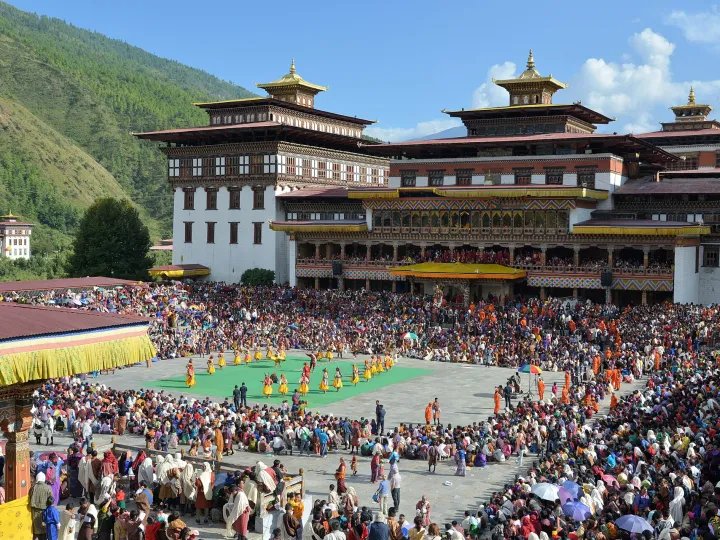
The capital's great autumn festival at Tashichho Dzong, with the Tiger's Nest before it and the warm valley of Punakha after.
Price on request
Festival
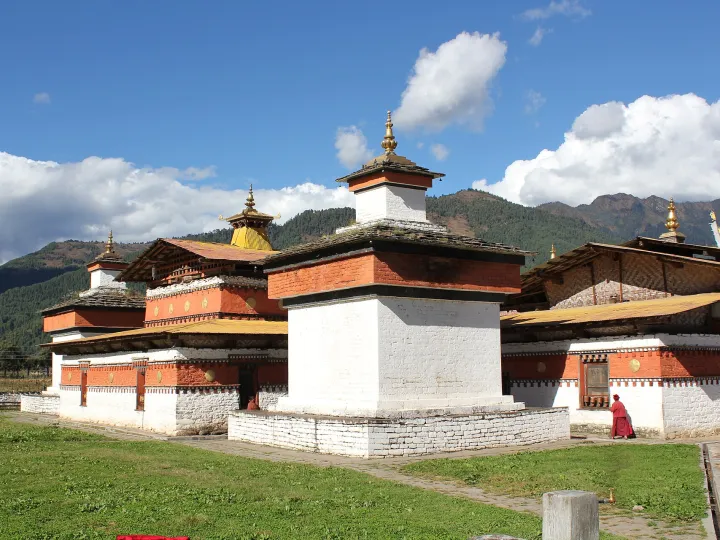
Ten days to Bumthang for the festival of fire at one of Bhutan's oldest temples, with cranes in Phobjikha on the way.
Price on request
These dates come from the official list, which is marked tentative: festivals follow the lunar calendar, and a date can move. We read the list on 3 October 2026. Check with us before you book a flight.
| Festival | Dates in 2027 | Our tour |
|---|---|---|
| Punakha Drubchen and Tshechu | 13 to 18 February | 7 days |
| Paro Tshechu | 18 to 22 March | 8 days |
| Thimphu Tshechu | 10 to 12 October | 8 days |
| Black-Necked Crane Festival | 11 November | 7 days |
| Jambay Lhakhang Drup | 14 to 17 November | 10 days |
A longer list, with the smaller festivals, is on our page of festivals and dates.
The Paro and Thimphu tshechus are the largest, and the most crowded. Punakha's two festivals fall in February, when the valley is mild and the country quiet. The Jambay Lhakhang Drup takes you to Bumthang, in the centre. The crane festival is a single day, and the smallest and gentlest of the five.
If another festival falls near your dates, any of our itineraries can be shifted a day or two to include it. Tell us when you are coming and we will tell you what is on.
Long sleeves and long trousers or a long skirt, as for any visit to a dzong, and no hat once you are inside. Bhutanese people wear their best clothes to a tshechu, so it is a day to dress neatly.
Keep out of the dance ground itself, and ask before photographing anyone close up. On the morning a thongdrel is shown the start is before sunrise, so bring something warm.
As early as you can. Festival dates are published well over a year ahead, and flights and hotels for those days are the first to fill, above all in Paro for the Paro Tshechu.
The published dates are tentative, because they follow the lunar calendar. Check them with us before you book a flight.
March to May and September to November have the mildest weather and the clearest skies, and the largest festivals fall in those months. They are also the busiest.
Winter is cold but dry and sunny, with the black-necked cranes in Phobjikha and the Punakha festivals. Summer is the monsoon: green, quiet and often cloudy. See the best time to visit Bhutan.
A few lines are enough: when, how long, and what draws you to Bhutan. We answer with a suggested route and what it would cost.
We reply ["within 24 hours"].