Trekking
Dagala Thousand Lakes Trek
Five days through high yak pasture south of Thimphu, among the small lakes that give the trek its name.
Price on request

Trekking
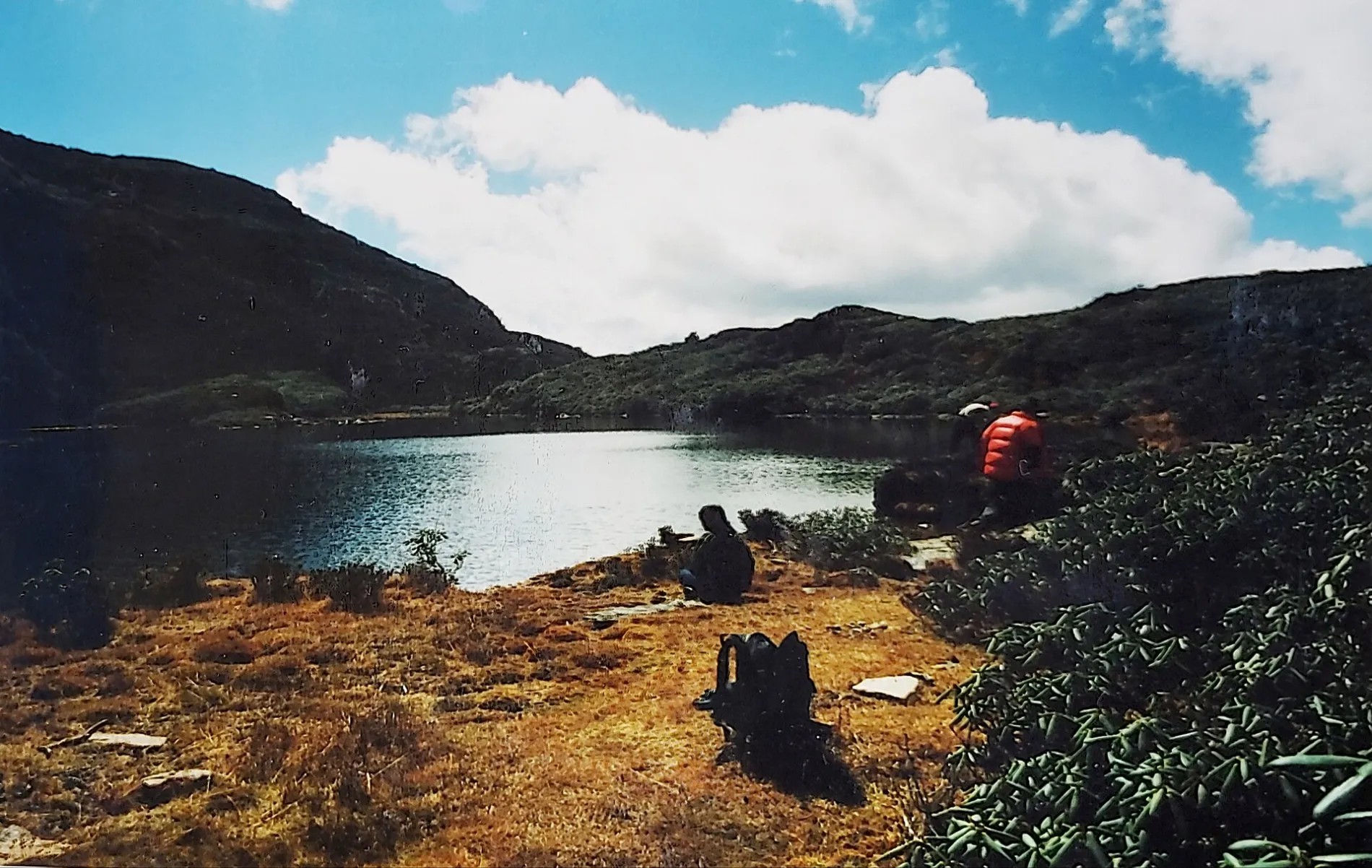
Six days along the ridge between Paro and Thimphu, past a ruined dzong and a chain of high lakes, with Jomolhari on the skyline in clear weather.
The Druk Path follows the old mule route over the mountains between Bhutan's two best-known valleys. It is the trek most people in Bhutan would suggest for a first one: the days are short, the trail is clear, and you finish by walking down into the capital.
Short days do not make it a stroll. The first is a climb of more than a thousand metres, the camps are between 3,500 and 4,100 m, and nights are cold in every season. In return there are rhododendron forests in spring, yak herders' camps, four lakes, and from the high ground a line of peaks along the border with Tibet.
We give the trek ten days door to door, with a walk to the Tiger's Nest first to help you adjust to the altitude and a day in Thimphu at the end.
Your guide meets you at the airport. The rest of the day is for settling in at 2,250 m: a visit to Rinpung Dzong and a stroll through the town are enough.
The walk to Taktsang is a sight in its own right and the best preparation for the trek, taking you to about 3,100 m and back down to sleep low. Allow four to five hours. Your trek gear is checked in the evening.
The crew and pack animals are waiting above the National Museum. Today is all uphill, first past farms and apple orchards and then through blue pine and fir, to a camp just below Jele Dzong. If the weather is kind the Paro valley is spread out behind you and Jomolhari shows to the north.
A gentler day along the ridge through thick rhododendron forest, which flowers in April and May. You may pass yak herders, and their dogs. Camp is in a pasture at Jangchulakha.
The trail keeps to the ridge, with the best mountain views of the trek when it is clear, then drops to the shore of Jimilang Tsho. The lake is known for its large trout.
Up and down through dwarf rhododendron, past the lake of Janye Tsho and more herders' camps, to the highest camp of the trek beside Simkotra Tsho.
A gradual climb to the highest point of the route, at about 4,200 m. On a very clear day Gangkar Puensum, the highest mountain in Bhutan, can be picked out to the north-east. Then the trail descends to Phajoding, a group of monasteries and retreat houses with Thimphu far below.
Downhill all the way through blue pine forest to the road above Thimphu, where the vehicle is waiting. A hot shower, lunch in town and a free afternoon.
A morning for the capital: the Memorial Chorten, the Buddha Dordenma and the craft bazaar are all close together. After lunch, the hour's drive back to Paro.
Transfer to the airport for your flight.
Hotels in Paro and Thimphu, and five nights in two-person tents on the trail.
Cooked meals on the trek, prepared by the camp cook, with tea brought to your tent in the morning. Boiled water is provided for your bottles.
A private vehicle with a driver between the airport, the hotels and the two ends of the trail.
A licensed trekking guide walks with you. The cook, helpers and horsemen go ahead to set up camp. Treks in Bhutan may only be undertaken with an accredited guide or operator.
Tents, sleeping mats, dining, kitchen and toilet tents, and all cooking gear. Your main bag is carried by the pack animals; you carry a day pack.
No army or national-park permit is needed for this route. We arrange your visa and the trek's paperwork.
You need to be comfortable walking four to five hours a day on rough ground for several days running, with one long climb on the first day. No climbing skill is needed. The risk on this trek is altitude: tell your guide at once about a headache that will not go, nausea or unusual tiredness. If you have a heart or lung condition, ask your doctor before booking.
Yes, unless you are an Indian national, in which case you need an entry permit instead. The visa costs US$40, is applied for online, and is normally decided within five working days.
When you book with us we make the application for you. You send a scan of your passport, which must be valid for at least six months, and a recent passport photo. See Bhutan visa and entry permits.
A fee every visitor pays to the government of Bhutan for each night in the country. It is US$100 a night for adults and US$50 for children aged 6 to 11; children under 6 pay nothing. Indian nationals pay Nu. 1,200 a night.
It is paid with your visa application. When you travel with us we collect it with the tour payment and pass it on. See the Sustainable Development Fee.
On a cultural tour, rarely. Paro and Thimphu are at 2,200 to 2,350 m, where most visitors notice only shortness of breath on stairs for a day or two. The road passes are higher, at 3,100 to almost 4,000 m, but you cross them by vehicle and do not stay.
Treks are different. Camps on the Druk Path are above 3,500 m and the northern treks cross passes near 5,000 m. Our trek itineraries build in days to adjust, and your guide will take you down if you show signs of altitude sickness. If you have a heart or lung condition, speak to your doctor before booking any trip to Bhutan.
March to May and September to November have the mildest weather and the clearest skies, and the largest festivals fall in those months. They are also the busiest.
Winter is cold but dry and sunny, with the black-necked cranes in Phobjikha and the Punakha festivals. Summer is the monsoon: green, quiet and often cloudy. See the best time to visit Bhutan.
More treks
Trekking
Five days through high yak pasture south of Thimphu, among the small lakes that give the trek its name.
Price on request
Trekking
Three days of village-to-village walking from the crane valley of Phobjikha, over forested passes that stay below about 3,500 m.
Price on request
Trekking
Seven days on foot to the base of Jomolhari and over two passes close to 5,000 m, coming down a different valley to Thimphu.
Price on request
A few lines are enough: when, how long, and what draws you to Bhutan. We answer with a suggested route and what it would cost.
We reply ["within 24 hours"].