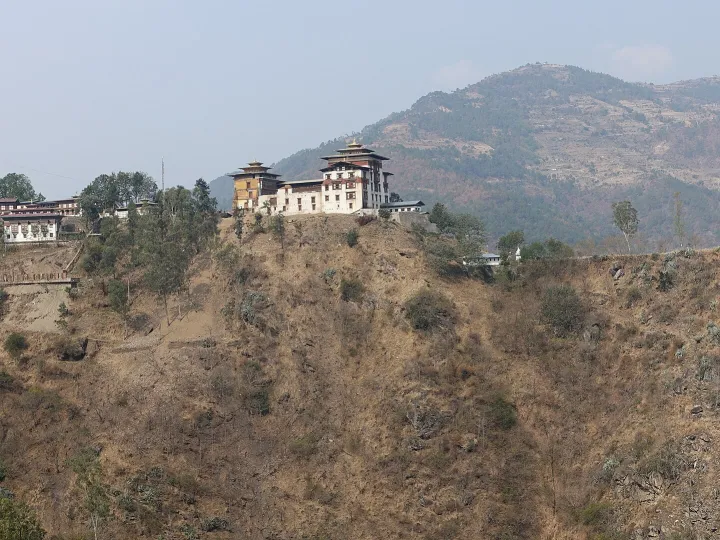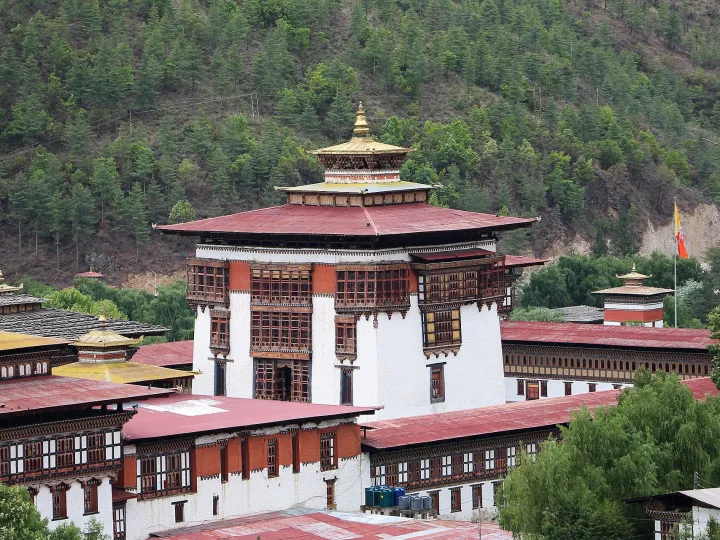
Cultural
Paro and Thimphu in 4 Days
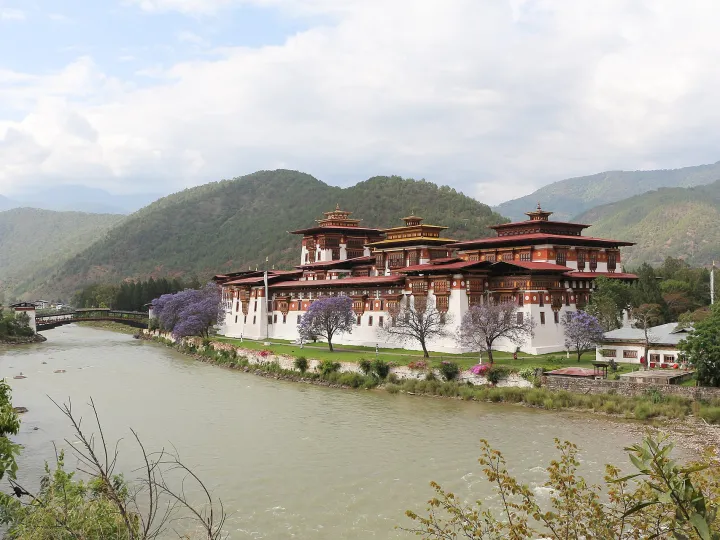
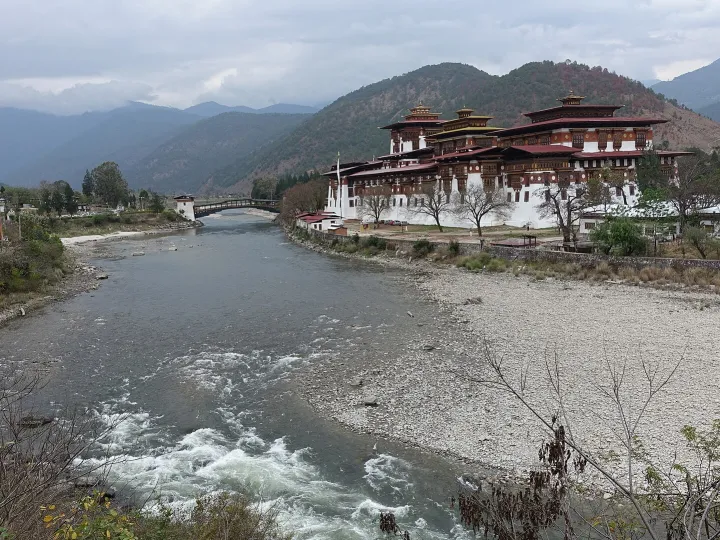
A long weekend in the two western valleys: the capital's sights, Paro's fortress and museum, and the walk to the Tiger's Nest.
Price on request

Cultural tours
Dzongs, temples, markets and farmhouses by road, with short walks and a guide who can explain what you are looking at.
Cultural
A long weekend in the two western valleys: the capital's sights, Paro's fortress and museum, and the walk to the Tiger's Nest.
Price on request
Cultural
Paro, Thimphu and Punakha, with the crossing of Dochu La and an afternoon at Punakha Dzong before the Tiger's Nest.
Price on request
Cultural
The three western valleys with a full day in the capital, a night beside Punakha Dzong and the Tiger's Nest to finish.
Price on request
Festival
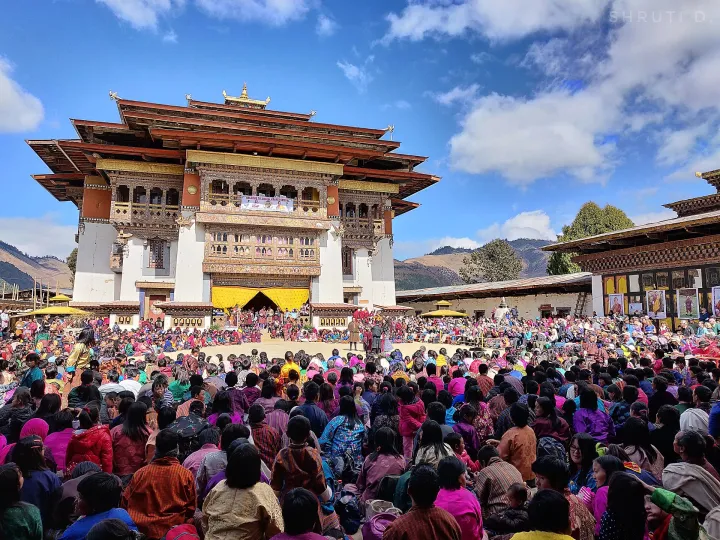
A week timed for 11 November, when Phobjikha welcomes its cranes back from Tibet with a festival in the courtyard of Gangtey Goenpa.
Price on request
Festival
A winter journey to Punakha Dzong for the Drubchen, when local men in warriors' dress re-enact a seventeenth-century battle.
Price on request
Cultural
Four valleys in a week: the capital, the warm rice terraces of Punakha, the crane valley of Phobjikha, and Paro for the walk to the Tiger's Nest.
Price on request
Festival
Eight days built around Paro's spring festival, ending with the dawn unveiling of the great thongdrel on the last morning.
Price on request
Festival
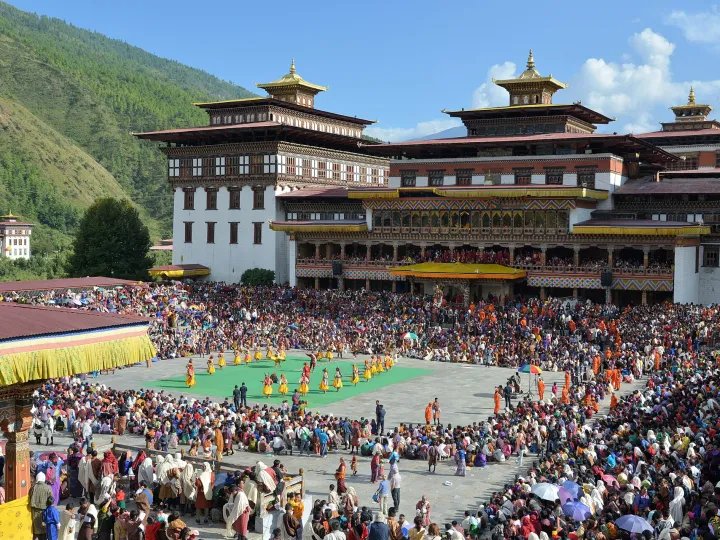
The capital's great autumn festival at Tashichho Dzong, with the Tiger's Nest before it and the warm valley of Punakha after.
Price on request
Cultural
Five western valleys, two high passes and a day in quiet Haa, at a pace that leaves room to walk as well as drive.
Price on request
Cultural
Two nights each in Thimphu, Phobjikha, Punakha and Paro, so that every valley has a day with no packing in it.
Price on request
Festival
Ten days to Bumthang for the festival of fire at one of Bhutan's oldest temples, with cranes in Phobjikha on the way.
Price on request
Cultural
West to the centre by road through Trongsa, three nights among Bumthang's temples, and a flight back over the mountains to Paro.
Price on request
Cultural
By road to the temples of Bumthang and back, then over Chele La for a night in quiet Haa before the Tiger's Nest.
Price on request
Cultural
The whole width of the country in two weeks, from the Tiger's Nest to the weaving villages of the far east, leaving by road into India.
Price on request
All six follow the same road east from Paro. What changes is how far along it you go.
| Length | How far it reaches | Longest drive |
|---|---|---|
| 4 days | Paro and Thimphu | About 1 hour |
| 5 days | Adds Punakha, over Dochu La | 3 to 3.5 hours |
| 7 days | Adds the Phobjikha valley | About 5 hours |
| 8 days | Adds Haa, over Chele La | About 5 hours |
| 10 days | Adds Trongsa and Bumthang, in the centre | About 5 hours |
| 14 days | Crosses the whole country to the east | 7 to 8 hours |
If this is your first visit and you have the time, seven days is the length we suggest. It reaches a valley beyond the usual three and still leaves two days for Paro.
You travel by private vehicle with a guide and a driver, and sleep in hotels. A day usually holds two or three visits, a walk of an hour or so, and a drive. Every tour includes the walk to the Tiger's Nest, which takes four to five hours, and none asks for more than ordinary fitness.
A guide is required inside dzongs and monuments, and is what makes them make sense: these are working monasteries and offices, not museums with labels.
Cultural tours run all year. Spring and autumn have the mildest weather, winter the clearest skies, and summer the fewest visitors. See the best time to visit Bhutan. If your dates are free, consider meeting a festival.
Four days is the shortest trip that works, and covers Paro and Thimphu. Five adds Punakha. Seven adds the Phobjikha valley and is what we suggest for a first visit.
With ten days you can reach Bumthang in the centre of the country, and with fourteen you can cross to the east. We set out the argument for each in how many days you need in Bhutan.
March to May and September to November have the mildest weather and the clearest skies, and the largest festivals fall in those months. They are also the busiest.
Winter is cold but dry and sunny, with the black-necked cranes in Phobjikha and the Punakha festivals. Summer is the monsoon: green, quiet and often cloudy. See the best time to visit Bhutan.
On a cultural tour, rarely. Paro and Thimphu are at 2,200 to 2,350 m, where most visitors notice only shortness of breath on stairs for a day or two. The road passes are higher, at 3,100 to almost 4,000 m, but you cross them by vehicle and do not stay.
Treks are different. Camps on the Druk Path are above 3,500 m and the northern treks cross passes near 5,000 m. Our trek itineraries build in days to adjust, and your guide will take you down if you show signs of altitude sickness. If you have a heart or lung condition, speak to your doctor before booking any trip to Bhutan.
Yes. Every itinerary on this site is a starting point. A private trip can be made longer or shorter, slowed down, or given more walking or more festivals. See tailor-made tours.
A few lines are enough: when, how long, and what draws you to Bhutan. We answer with a suggested route and what it would cost.
We reply ["within 24 hours"].