Trekking
Dagala Thousand Lakes Trek
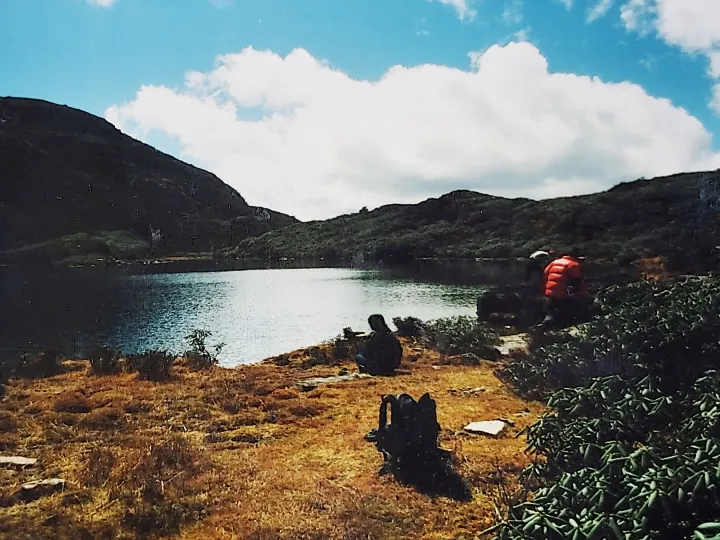
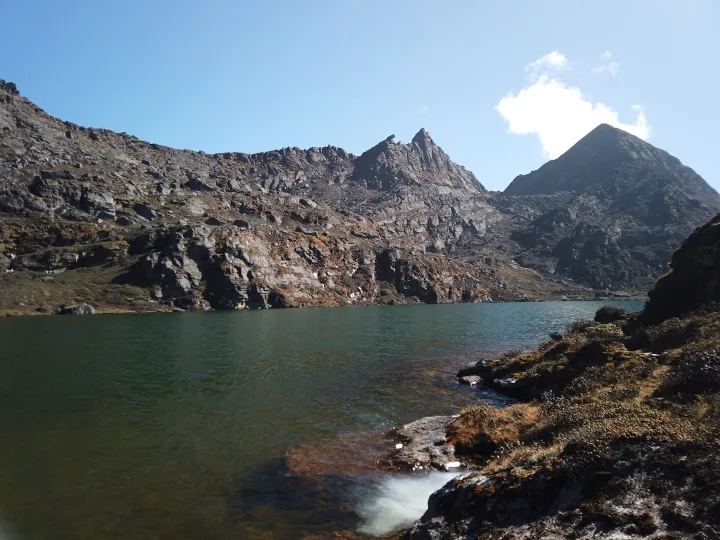
Five days through high yak pasture south of Thimphu, among the small lakes that give the trek its name.
Price on request

Trekking
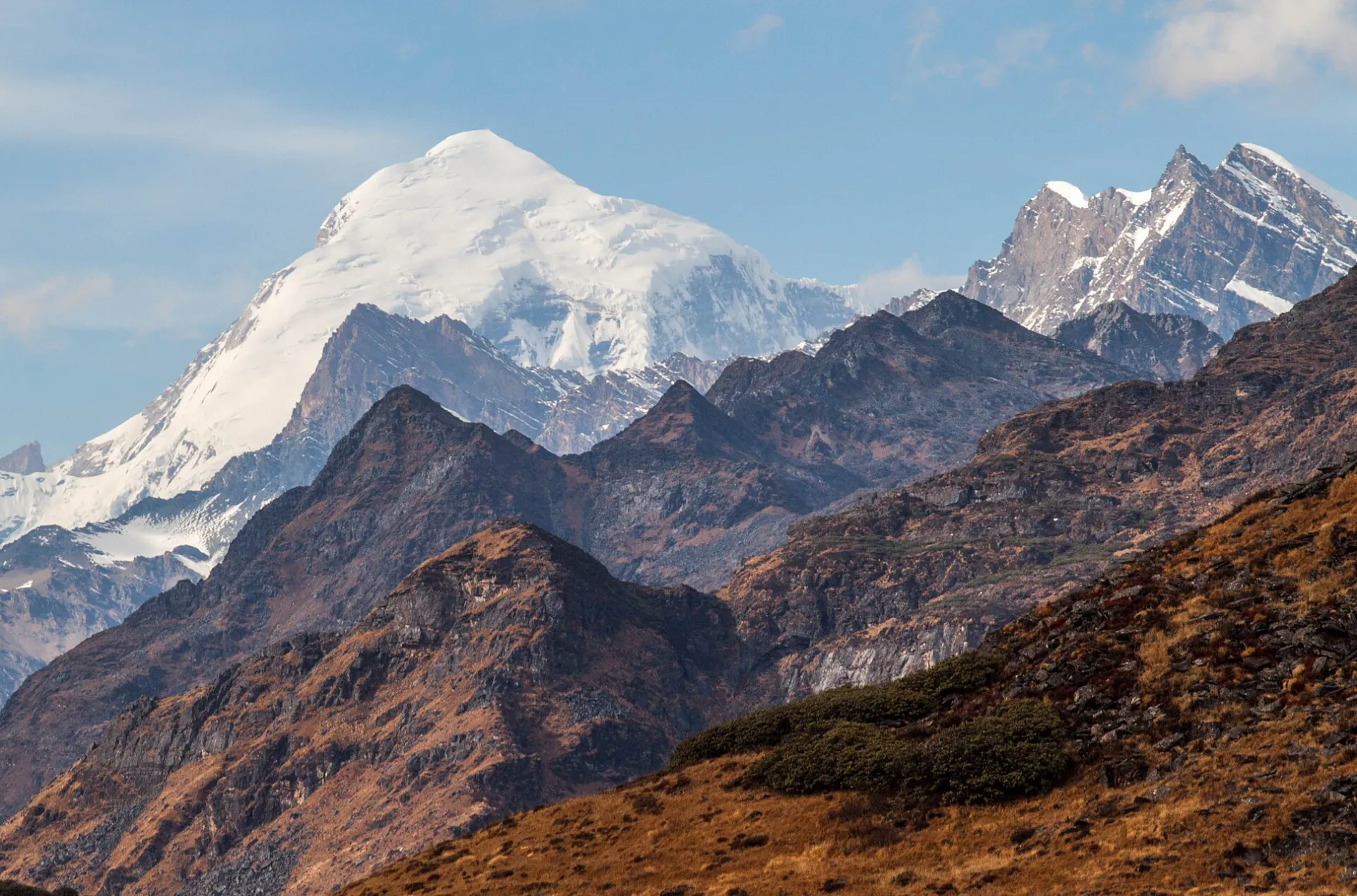
Seven days on foot to the base of Jomolhari and over two passes close to 5,000 m, coming down a different valley to Thimphu.
This is Bhutan's classic high trek. It follows the Paro river up to Jangothang, the camp beneath Jomolhari, 7,326 m, rests a day there, then crosses to the remote valley of Lingshi and over Yeli La before the long descent towards Thimphu.
It is a serious walk. Two days are over 20 km, two passes are close to 5,000 m, and four nights are spent at about 4,000 m. In return you get a week in the country of yak herders and blue sheep, and a mountain that fills the end of the valley when you open the tent.
The trail lies inside Jigme Dorji National Park and close to the northern border, so it needs permits, which we arrange. Spring is the season of flowers; October and November usually give the clearest views and the coldest nights.
Your guide meets you at the airport. The rest of the day is for settling in at 2,250 m: a visit to Rinpung Dzong and a walk through the town are enough.
The walk to Taktsang is the best preparation for the trek, taking you to about 3,100 m and back down to sleep low. Allow four to five hours. Your trek gear is checked in the evening.
You drive up the valley to the trailhead at Shana, where the crew and pack animals are waiting. It is a long first day, following the Paro river through forest, climbing gently but for many hours. The first sight of Jomolhari comes near camp, if the sky is clear.
The valley widens and the trees thin out. You pass an army post and the winter houses of yak herders, and by afternoon reach Jangothang, a broad meadow beside the ruins of a small fort, with the white wall of Jomolhari straight ahead.
A rest day, and a necessary one before the pass. The usual rule is to walk high and sleep low: up the ridge for the view of Jichu Drake, or to the lakes of Tshophu, where blue sheep graze the slopes.
A steady climb to Nyile La, the first high pass, at about 4,870 m. On the far side the land falls away into the wide, empty valley of Lingshi, with its dzong on a hill in the distance.
The hardest day. The trail climbs from Lingshi to Yeli La, 4,930 m, from where Jomolhari, Tserim Kang and Masang Gang can be seen in good weather. A long descent follows, to the camp at Shodu.
Back among trees. The path follows the Thimphu river downstream, past waterfalls, to the ruined fort of Barshong.
The last walk, down through forest to the road head above Thimphu, where the vehicle meets you. A hotel, a shower and a bed.
A day to rest and see the capital at whatever pace your legs allow: the Memorial Chorten, the Buddha Dordenma, the craft bazaar.
An hour's drive to Paro, for the National Museum and Kyichu Lhakhang.
Transfer to the airport for your flight.
Hotels in Paro and Thimphu, and six nights in two-person tents on the trail.
Cooked meals on the trek, prepared by the camp cook, with tea brought to your tent in the morning. Boiled water is provided for your bottles.
A private vehicle with a driver between the airport, the hotels and the two ends of the trail.
A licensed trekking guide walks with you. The cook, helpers and horsemen go ahead to set up camp. Treks in Bhutan may only be undertaken with an accredited guide or operator.
Tents, sleeping mats, dining, kitchen and toilet tents, and all cooking gear. Your main bag is carried by the pack animals; you carry a day pack.
This route needs an army permit and a national-park permit as well as your visa. We apply for all three; allow extra time when booking.
This trek is for people who already walk in mountains. You need to be able to walk seven or eight hours a day, several days running, above 4,000 m. The rest day at Jangothang is there for acclimatisation and is not optional. Anyone showing signs of altitude sickness is taken down, which can mean turning back before the passes. Insurance that covers helicopter evacuation is strongly advised, and a medical check before booking is sensible for anyone over sixty or with a heart or lung condition.
On a cultural tour, rarely. Paro and Thimphu are at 2,200 to 2,350 m, where most visitors notice only shortness of breath on stairs for a day or two. The road passes are higher, at 3,100 to almost 4,000 m, but you cross them by vehicle and do not stay.
Treks are different. Camps on the Druk Path are above 3,500 m and the northern treks cross passes near 5,000 m. Our trek itineraries build in days to adjust, and your guide will take you down if you show signs of altitude sickness. If you have a heart or lung condition, speak to your doctor before booking any trip to Bhutan.
It depends on the trek. For Bumdra and Gangtey, anyone who walks regularly will manage. The Druk Path and the Dagala Thousand Lakes trek ask for five or six hours a day at up to 4,300 m.
The Jomolhari trek means seven or eight hours a day, with passes close to 5,000 m. Laya–Gasa and the Snowman are for people who have already trekked at altitude, and we ask about your experience before taking a booking. Each trek page says what it needs under "Fitness and preparation".
We provide the tents, sleeping mats, a dining tent, a kitchen tent and a toilet tent, and all the cooking gear, with a guide, a cook and helpers. Pack animals carry the baggage, so you walk with a day pack.
You bring your own boots, clothing and sleeping bag. Each trek page has a packing list.
It has not been compulsory since 23 April 2024, but the Department of Tourism strongly recommends it and so do we. Make sure it covers medical treatment and evacuation.
For a trek, check that the policy covers the altitude you will reach and rescue by helicopter.
More treks
Trekking
Five days through high yak pasture south of Thimphu, among the small lakes that give the trek its name.
Price on request
Trekking
Six days along the ridge between Paro and Thimphu, past a ruined dzong and a chain of high lakes, with Jomolhari on the skyline in clear weather.
Price on request
Trekking
Three days of village-to-village walking from the crane valley of Phobjikha, over forested passes that stay below about 3,500 m.
Price on request
A few lines are enough: when, how long, and what draws you to Bhutan. We answer with a suggested route and what it would cost.
We reply ["within 24 hours"].