Cultural
Bumthang and the Haa Valley in 11 Days
By road to the temples of Bumthang and back, then over Chele La for a night in quiet Haa before the Tiger's Nest.
Price on request

Cultural
The whole width of the country in two weeks, from the Tiger's Nest to the weaving villages of the far east, leaving by road into India.
One road runs the length of Bhutan, and this journey follows it from end to end. The first week is the Bhutan most visitors see. The second is not: past Bumthang the traffic thins, the hotels get simpler, and you may go a whole day without meeting another traveller.
The east is steeper and warmer than the west and its people speak a different language. It is known for its weaving, for the dzong at Trashigang, and for the two great chortens on the road to Trashi Yangtse.
Rather than drive all the way back, you leave Bhutan at Samdrup Jongkhar and fly out of Guwahati in India. That needs an Indian visa, arranged before you travel. If you would rather return to Paro, we can end the trip with the flight from Bumthang instead.
Because this journey does not return to Paro, the valley comes first. After settling in you visit Rinpung Dzong and the National Museum above it.
The walk to Taktsang on your second day, taken slowly: you have only just arrived at altitude. Four to five hours there and back, with a long rest at the teahouse. Kyichu Lhakhang in the afternoon.
An hour to the capital, and a day to see it: the Memorial Chorten, the Buddha Dordenma, the crafts school and, in the evening, Tashichho Dzong.
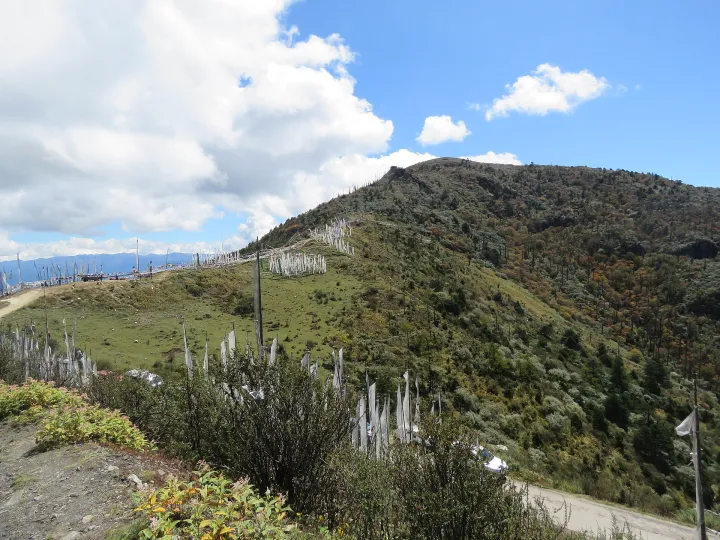
The first of the passes. Dochu La and its chortens, then the descent to Punakha, Chimi Lhakhang and the dzong.
A morning walk to Khamsum Yulley Namgyal Chorten, then east and up to Phobjikha for Gangtey Goenpa and the valley trail.
Over Pele La into central Bhutan. You reach Trongsa by early afternoon, in time to walk through the dzong, the largest in the country, and climb to the museum in its watchtower. Staying the night here, rather than driving on, lets you see the dzong lit by the last sun.
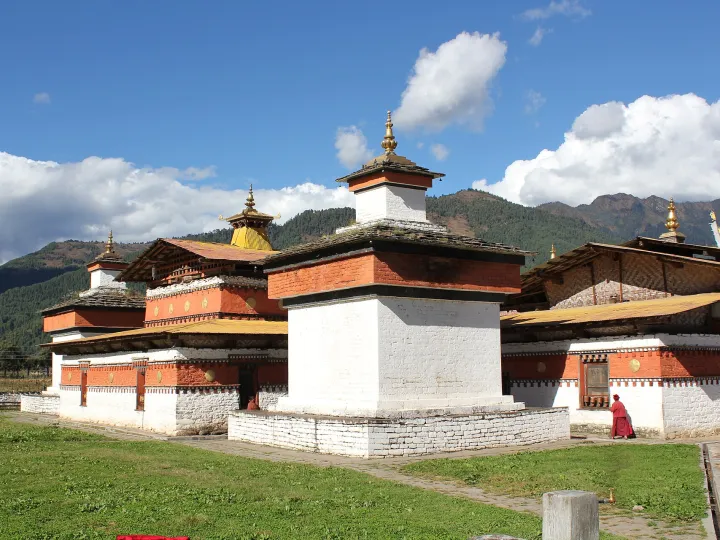
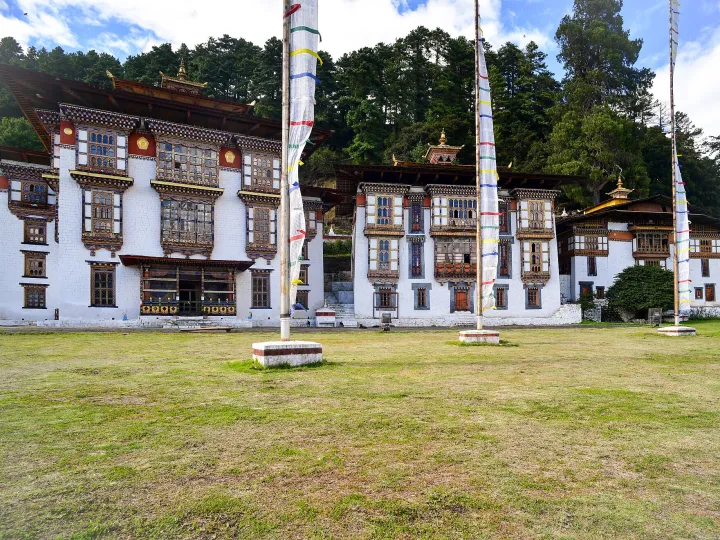
A short drive over Yotong La brings you to Bumthang before lunch. The afternoon is for the old temples of the Chokhor valley: Jambay Lhakhang and Kurjey Lhakhang, a walk apart.
Tamshing Lhakhang and Jakar Dzong in the morning, and the gorge of Mebar Tsho, the Burning Lake, in the afternoon. A quiet day before the longest drive of the trip.
A full day on the road and a memorable one. Beyond the village of Ura the highway climbs to Thrumshing La, then falls through cliffs and waterfalls from fir forest into subtropical jungle before the last climb to Mongar. You are now in the east.
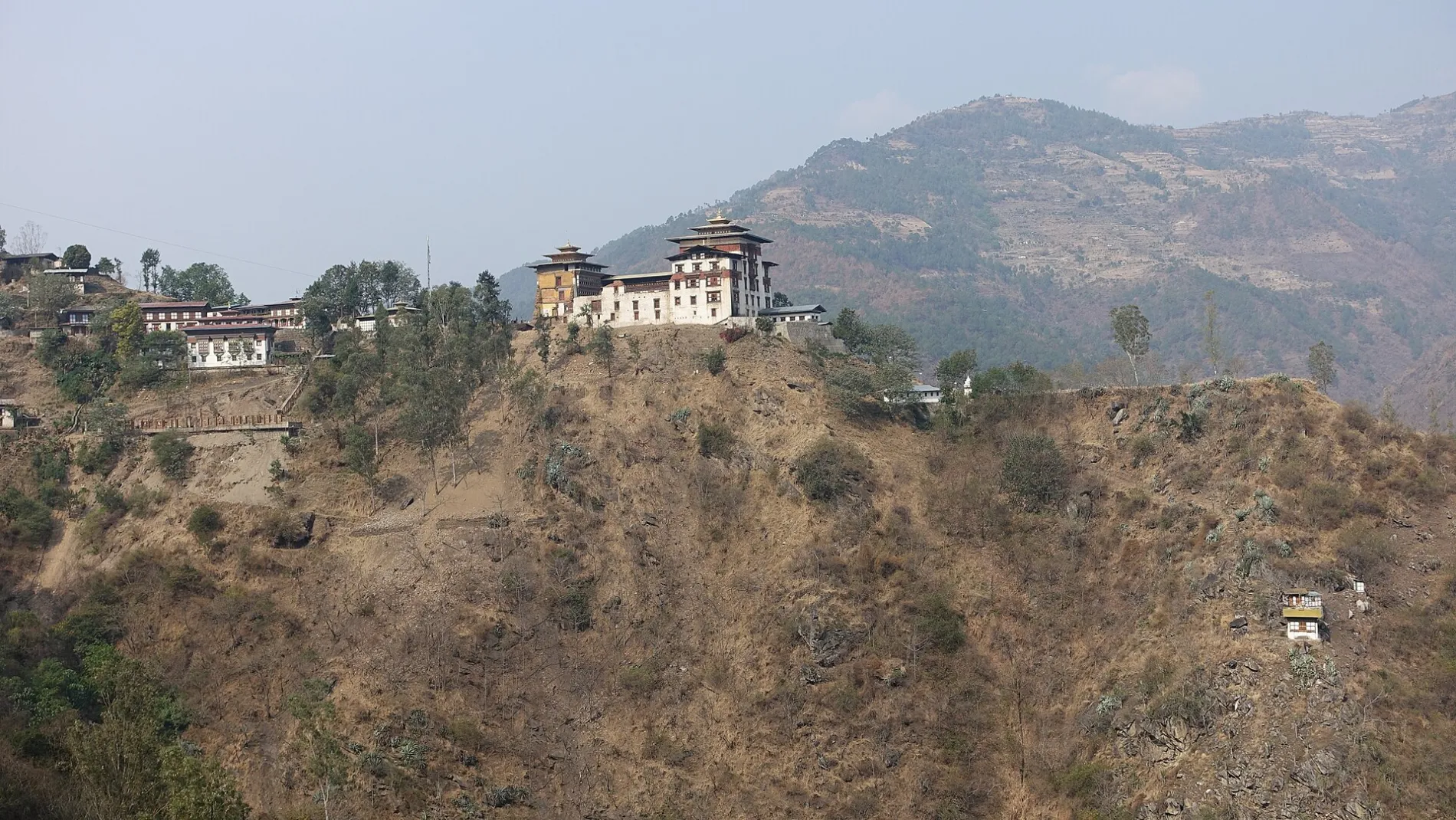
After a look at Mongar Dzong the road crosses one more ridge and follows the river to Trashigang, a small hillside town with its dzong perched on a spur far above the water.
A day's excursion north. Gom Kora is a temple beside a great black rock on the river bank. At Trashi Yangtse stands Chorten Kora, a large white stupa that draws pilgrims from across the east in early spring.
A day for the countryside.
The road south leaves the mountains behind, dropping through Kanglung and Khaling to the border town of Samdrup Jongkhar on the edge of the Assam plain.
Your guide sees you through the Bhutanese exit formalities. From the border it is a drive across Assam to Guwahati and its airport.
Hotels in every town on the route. East of Bumthang they are simple: clean rooms and hot water, but little choice.
Breakfast and dinner at your hotel and lunch at a local restaurant on the way. Tell us about any dietary need when you book; vegetarian food is easy everywhere.
A private vehicle with a driver for the whole crossing. Expect long days on a narrow, winding road, with roadworks in places. We stop often.
One licensed guide stays with you from arrival to departure. A guide is required by the authorities inside dzongs and monuments.
We apply for your Bhutan visa once the trip is confirmed. You enter by air at Paro and leave by road at Samdrup Jongkhar, so you also need an Indian visa that is valid for arrival by land. See our page on the [visa](/bhutan-travel-guide/visa/).
Yes, unless you are an Indian national, in which case you need an entry permit instead. The visa costs US$40, is applied for online, and is normally decided within five working days.
When you book with us we make the application for you. You send a scan of your passport, which must be valid for at least six months, and a recent passport photo. See Bhutan visa and entry permits.
A fee every visitor pays to the government of Bhutan for each night in the country. It is US$100 a night for adults and US$50 for children aged 6 to 11; children under 6 pay nothing. Indian nationals pay Nu. 1,200 a night.
It is paid with your visa application. When you travel with us we collect it with the tour payment and pass it on. See the Sustainable Development Fee.
Yes. There are land crossings to India at Phuentsholing, Samtse, Gelephu and Samdrup Jongkhar. Our 14-day tour ends at Samdrup Jongkhar, from where it is a drive across Assam to the airport at Guwahati.
You need an Indian visa that allows entry by land, and you must have it before you travel.
March to May and September to November have the mildest weather and the clearest skies, and the largest festivals fall in those months. They are also the busiest.
Winter is cold but dry and sunny, with the black-necked cranes in Phobjikha and the Punakha festivals. Summer is the monsoon: green, quiet and often cloudy. See the best time to visit Bhutan.
More tours
Cultural
By road to the temples of Bumthang and back, then over Chele La for a night in quiet Haa before the Tiger's Nest.
Price on request
Festival
Ten days to Bumthang for the festival of fire at one of Bhutan's oldest temples, with cranes in Phobjikha on the way.
Price on request
Cultural
West to the centre by road through Trongsa, three nights among Bumthang's temples, and a flight back over the mountains to Paro.
Price on request
A few lines are enough: when, how long, and what draws you to Bhutan. We answer with a suggested route and what it would cost.
We reply ["within 24 hours"].