Festival
Black-Necked Crane Festival Tour
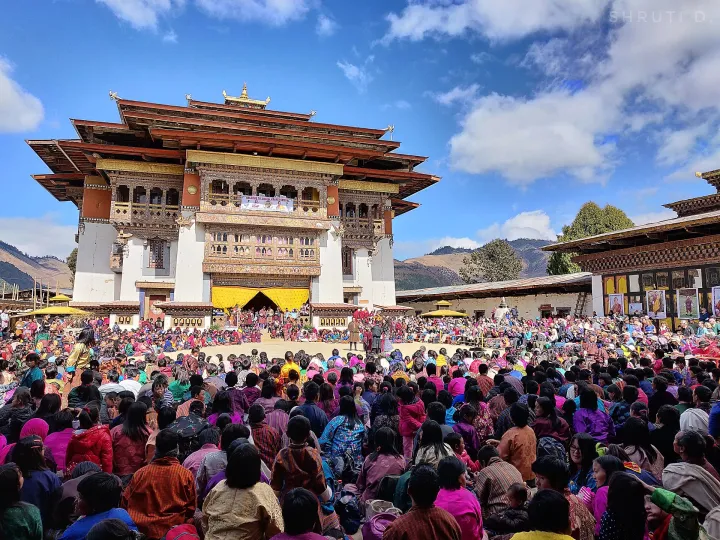
A week timed for 11 November, when Phobjikha welcomes its cranes back from Tibet with a festival in the courtyard of Gangtey Goenpa.
Price on request

Festival
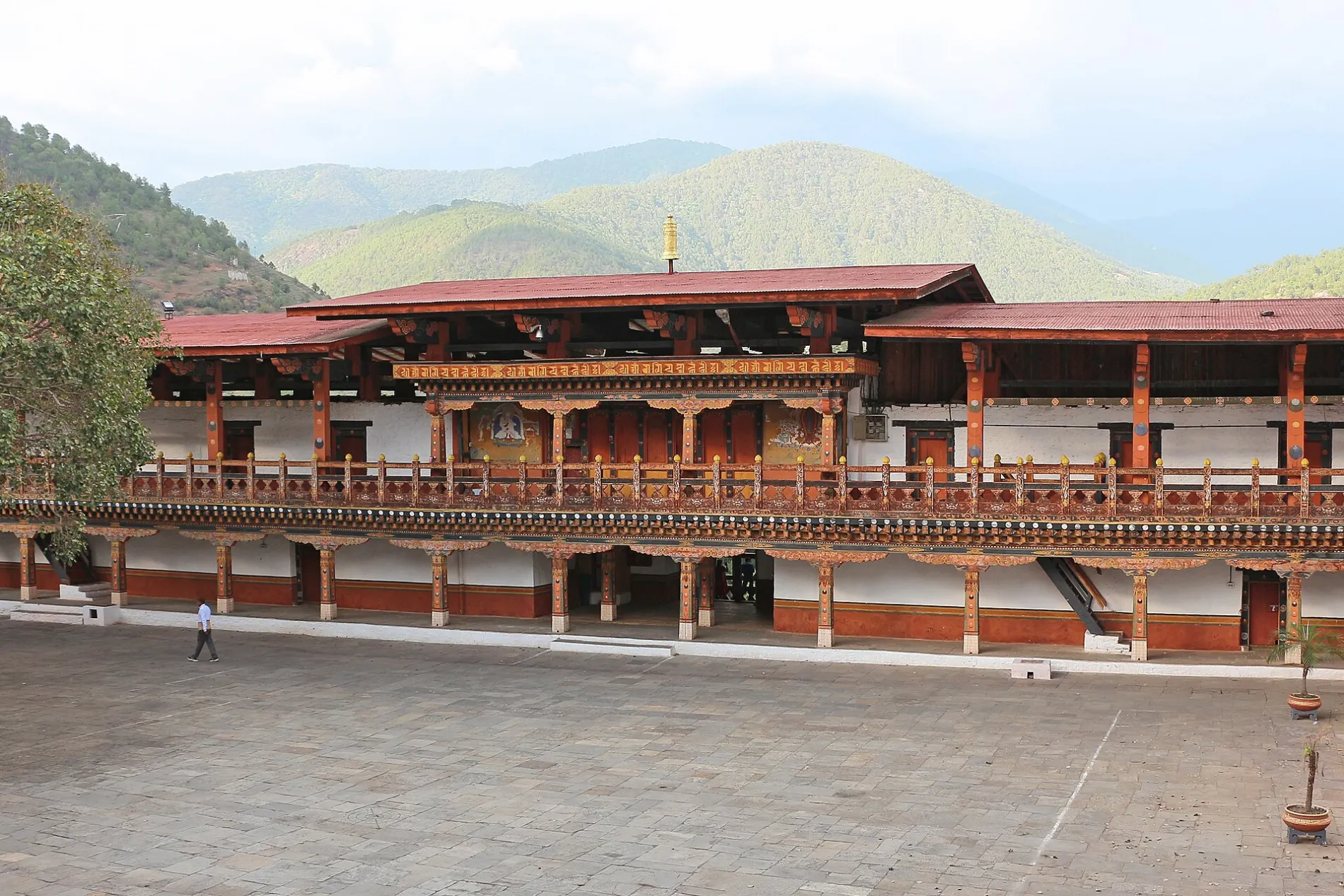
A winter journey to Punakha Dzong for the Drubchen, when local men in warriors' dress re-enact a seventeenth-century battle.
Punakha holds two festivals back to back in late winter. The Drubchen, expected from 13 to 15 February 2027, is unlike any other in Bhutan: it recalls the defeat of an invading Tibetan army in the seventeenth century, and its heroes are the pazaps, men of the nearby villages who dress as warriors and march on the dzong. The Tshechu follows from 16 to 18 February.
February suits Punakha. At 1,242 m the valley is mild when the rest of the country is cold, the skies are clear and there are few other visitors.
This trip would start on 12 February and is there for the last two days of the Drubchen and the first morning of the Tshechu. Bring warm clothes for Thimphu and Paro, where winter nights fall below freezing.
Festival dates follow the lunar calendar. Those given here are from the official tentative list for 2027, last read on 3 October 2026, and can still move by a day or two. We confirm them with you before you book flights.
Friday 12 February on the planned dates. An hour to the capital; the Memorial Chorten and Buddha Dordenma in the afternoon.
A day for the town: the crafts school, the Textile Museum, Changangkha Lhakhang and, in the early evening, Tashichho Dzong. In winter the central monks are away in Punakha, where you will find them tomorrow.
Winter mornings give some of the sharpest views of the year from Dochu La. You are in Punakha by midday and at the dzong for the afternoon, as the Drubchen builds towards its last day.
The day of the pazaps. Men from the villages around Punakha, dressed as the warriors of the seventeenth century, act out the defence of the dzong against the Tibetan army. Your guide tells you the story as it unfolds.
The walk to Khamsum Yulley Namgyal Chorten fits into the morning or the late afternoon.
The Tshechu opens with masked dances in the dzong's courtyard. You watch the morning's programme, walk out to Chimi Lhakhang, and leave after lunch for Paro.
In February the path to Taktsang can have ice on its shaded corners early in the day, so you start a little later than in other seasons. Four to five hours there and back. Kyichu Lhakhang afterwards.
Transfer to the airport.
Hotels in Thimphu, Punakha and Paro. Ask about heating: winter nights in Thimphu and Paro are cold.
Breakfast and dinner at your hotel and lunch at a local restaurant on the way. Tell us about any dietary need when you book; vegetarian food is easy everywhere.
A private vehicle with a driver for the whole trip. The road is paved and winding, so drives are slower than their distance suggests.
One licensed guide stays with you from arrival to departure. A guide is required by the authorities inside dzongs and monuments. At a festival your guide explains each dance as it happens, which changes what you see.
We apply for your visa once the trip is confirmed; it is normally issued within five working days. You need a passport valid for at least six months. See our pages on the [visa](/bhutan-travel-guide/visa/) and the [Sustainable Development Fee](/bhutan-travel-guide/sustainable-development-fee/).
Long sleeves and long trousers or a long skirt, as for any visit to a dzong, and no hat once you are inside. Bhutanese people wear their best clothes to a tshechu, so it is a day to dress neatly.
Keep out of the dance ground itself, and ask before photographing anyone close up. On the morning a thongdrel is shown the start is before sunrise, so bring something warm.
As early as you can. Festival dates are published well over a year ahead, and flights and hotels for those days are the first to fill, above all in Paro for the Paro Tshechu.
The published dates are tentative, because they follow the lunar calendar. Check them with us before you book a flight.
Yes, unless you are an Indian national, in which case you need an entry permit instead. The visa costs US$40, is applied for online, and is normally decided within five working days.
When you book with us we make the application for you. You send a scan of your passport, which must be valid for at least six months, and a recent passport photo. See Bhutan visa and entry permits.
A fee every visitor pays to the government of Bhutan for each night in the country. It is US$100 a night for adults and US$50 for children aged 6 to 11; children under 6 pay nothing. Indian nationals pay Nu. 1,200 a night.
It is paid with your visa application. When you travel with us we collect it with the tour payment and pass it on. See the Sustainable Development Fee.
More tours
Festival
A week timed for 11 November, when Phobjikha welcomes its cranes back from Tibet with a festival in the courtyard of Gangtey Goenpa.
Price on request
Cultural
Four valleys in a week: the capital, the warm rice terraces of Punakha, the crane valley of Phobjikha, and Paro for the walk to the Tiger's Nest.
Price on request
Cultural
The three western valleys with a full day in the capital, a night beside Punakha Dzong and the Tiger's Nest to finish.
Price on request
A few lines are enough: when, how long, and what draws you to Bhutan. We answer with a suggested route and what it would cost.
We reply ["within 24 hours"].